 CTICases
Interrupted Aortic Arch, Type B Variant with Aberrant Subclavian Arteries
 ▶ Watch on YouTube — age-restricted, cannot embed here
[...]. Interrupted Aortic Arch, Type B Variant with Aberrant Subclavian Arteries. CTICases. Published October 22, 2015. https://cticases.com/c/p5wm3
Imaging findings
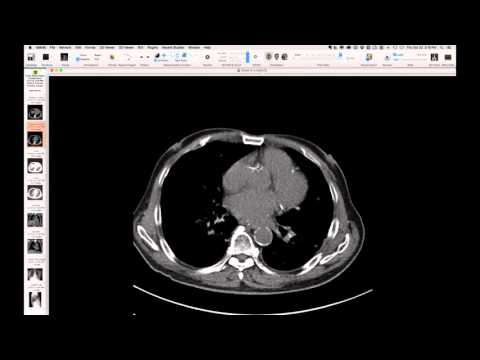
Very hypoplastic ascending aorta giving rise to the two common carotid arteries. There is an interruption of the aortic arch after the carotid arteries. The left subclavian artery originates from the descending thoracic aorta, classifying it as a Type B interruption. Additionally, both subclavian arteries arise from the descending thoracic aorta. A large patent ductus arteriosus (PDA) is present, resembling a transverse aorta.
Key takeaways
This case presents a rare variant of Type B interrupted aortic arch where both subclavian arteries originate from the descending thoracic aorta. This unique anatomical configuration, coupled with a severely hypoplastic ascending aorta, underscores the wide spectrum of congenital aortic arch anomalies.
AI-assisted summary — may contain errors. Verify against the source video. Learn more
More from this webinar
- Interrupted Aortic Arch, Type A with Aortopulmonary WindowCongenital
- Post-Transplant Lymphoproliferative Disorder (PTLD), Polyclonal Polymorphic TypeNeoplastic
- Primary Effusion Lymphoma (PFL) in HIV-Positive PatientNeoplastic
- Apical Hypertrophic Cardiomyopathy with Apical AneurysmCongenital
- Double Saddle Pulmonary EmbolismVascular
- Primary Coccidioidomycosis with CavitationInfection
- Disseminated CoccidioidomycosisInfection
- Isolated Pulmonary Cryptococcosis in an Immunocompetent PatientInfection
See all cases from October 22, 2015 →
Related Congenital cases
- Dual LAD Coronary Artery Anomaly
- Congenital Pulmonary Airway Malformation (CPAM) Mimicking Adenocarcinoma
- Bridging Bronchus with Azygos Fissure
- Hypertrophic Cardiomyopathy with Chordal Systolic Anterior Motion (SAM)
- Anomalous Left Main Coronary Artery with Intramural Course
- Congenitally Corrected Transposition of the Great Arteries (L-TGA)