 CTICases
Auto-pneumonectomy and SVC Obstruction due to Necrotizing Infection
 ▶ Watch on YouTube — age-restricted, cannot embed here
[...]. Auto-pneumonectomy and SVC Obstruction due to Necrotizing Infection. CTICases. Published August 20, 2015. https://cticases.com/c/xsq6v
Imaging findings
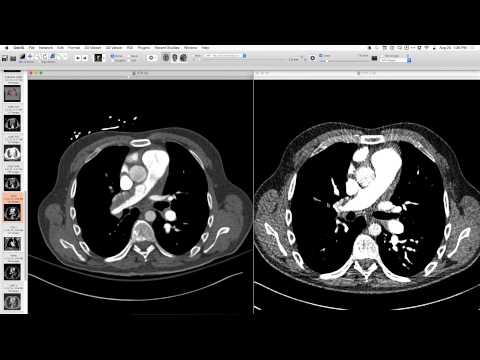
Scout radiograph showed an absent left lung or pneumonectomy appearance. Non-contrast CT revealed significant mediastinal rotation, making the SVC difficult to visualize. The right main bronchus and bronchus intermedius were stretched and narrowed. A cavogram showed retrograde flow up the neck veins and subclavian, with stagnant flow, indicating SVC obstruction. Surprisingly, there were no robust collaterals.
Key takeaways
Auto-pneumonectomy resulting from a necrotizing infection (likely not TB due to rapid progression) can lead to severe mediastinal shift and traction on the SVC, causing SVC syndrome. The absence of extensive collateralization might indicate a rapid onset. The mediastinal shift can also cause post-pneumonectomy syndrome-like bronchial stretching and narrowing.
AI-assisted summary — may contain errors. Verify against the source video. Learn more
More from this webinar
- Retained Wires from First-Generation DefibrillatorIatrogenic
- Hyperacute Pulmonary Infarction progressing to Acute PE with Pleural EffusionVascular
- Left Upper Lobe Anomalous Pulmonary Venous Stricture (Incidental)Congenital
- Lymphocytic Interstitial Pneumonia (LIP) in association with B-cell LymphomaNeoplastic
- Endobronchial Papillomatosis with Left Lower Lobe CollapseNeoplastic
- Esophageal Carcinoma with Radiographic CorrelationNeoplastic
- Cardiogenic Pulmonary Edema with Ground Glass OpacityVascular
- Hypersensitivity Pneumonitis (HP) in a Dog GroomerILD
See all cases from August 20, 2015 →
Related Vascular cases
- Complex Arteriovenous Malformation (Internal Mammary Artery Supply)
- Chronic Thromboembolic Pulmonary Hypertension (CTEPH) - Peripheral Disease
- Retrograde Extension of Type B Aortic Dissection into the Aortic Arch with Endovascular Repair
- Ruptured Type B Aortic Intramural Hematoma with Hemothorax
- Systolic Anterior Motion (SAM) of the Mitral Valve without Hypertrophic Cardiomyopathy
- Cavitating Pulmonary Infarct secondary to Pulmonary Embolism