 CTICases
Nocardia Nova in a Heart Transplant Patient
 ▶ Watch on YouTube — age-restricted, cannot embed here
[...]. Nocardia Nova in a Heart Transplant Patient. CTICases. Published August 20, 2015. https://cticases.com/c/93vr9
Imaging findings
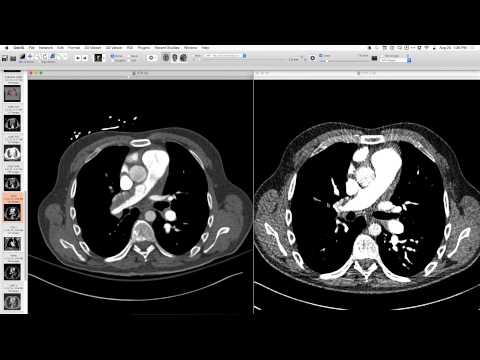
Initial CT showed a small incidental lesion on the surface of the heart, a few months post-transplantation. Follow-up CT two months later showed growth of this lesion and new nodules in the right lung base, along with some tree-in-bud opacities. The lesion became visible on chest radiograph as a round lesion adjacent to the heart. The lesion was needled and grew out Nocardia nova.
Key takeaways
Nocardia (specifically Nocardia nova) is a common cause of lung nodules in solid organ transplant patients with modest immune suppression. These nodules can be relatively asymptomatic and show slow growth over months. They can also cavitate. Nocardia is a pathogenic organism, never a commensal in humans.
AI-assisted summary — may contain errors. Verify against the source video. Learn more
More from this webinar
- Retained Wires from First-Generation DefibrillatorIatrogenic
- Hyperacute Pulmonary Infarction progressing to Acute PE with Pleural EffusionVascular
- Left Upper Lobe Anomalous Pulmonary Venous Stricture (Incidental)Congenital
- Lymphocytic Interstitial Pneumonia (LIP) in association with B-cell LymphomaNeoplastic
- Endobronchial Papillomatosis with Left Lower Lobe CollapseNeoplastic
- Esophageal Carcinoma with Radiographic CorrelationNeoplastic
- Cardiogenic Pulmonary Edema with Ground Glass OpacityVascular
- Hypersensitivity Pneumonitis (HP) in a Dog GroomerILD
See all cases from August 20, 2015 →
Related Infection cases
- Mycoplasma-induced Acute Interstitial Pneumonia / ARDS
- Disseminated Mycobacterium Bovis (BCG) Infection Presenting as Pleural and Chest Wall Disease
- E. coli Sternal Osteomyelitis and Anterior Mediastinitis
- Hematogenous Dissemination of Enteric Organisms Causing Costal Chondritis and Chest Wall Cellulitis
- Legionella Pneumonia
- Blastomycosis