 CTICases
Goodpasture Syndrome (Anti-GBM Disease)
 ▶ Watch on YouTube — age-restricted, cannot embed here
[...]. Goodpasture Syndrome (Anti-GBM Disease). CTICases. Published July 7, 2014. https://cticases.com/c/hbtef
Imaging findings
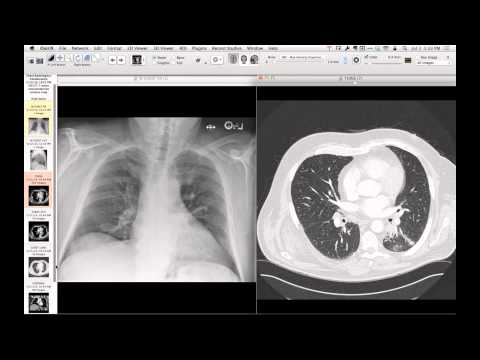
Chest radiography shows profound, bilateral, symmetric airspace opacities predominantly affecting the middle and lower lung zones. High-resolution CT shows diffuse ground-glass opacities and areas of consolidation, characteristic of diffuse alveolar hemorrhage, with rapid clearance and nearly complete normalization of the lungs on follow-up radiographs a few weeks after therapy.
Key takeaways
Goodpasture syndrome is an autoimmune condition caused by anti-glomerular basement membrane antibodies that can manifest as life-threatening diffuse alveolar hemorrhage. While renal failure is common, a minority of patients present with isolated pulmonary hemorrhage and normal renal function. The disease responds rapidly to corticosteroid therapy, showing dramatic radiographic improvement.
AI-assisted summary — may contain errors. Verify against the source video. Learn more
More from this webinar
- Spontaneous Pneumomediastinum and Pneumoretroperitoneum due to Macklin PhenomenonOther
- Thoracic Spine Discitis-Osteomyelitis and Paraspinal Abscess due to Disseminated Mycobacterium avium complexInfection
- Right Ventricular Perforation and Pericardial Contrast InjectionIatrogenic
- Esophagopericardial FistulaOther
- Congenital Hypoplasia of the Right Upper LobeCongenital
- Behçet Syndrome with Multiple Pulmonary Artery AneurysmsAutoimmune
- Left Ventricular Pseudoaneurysm post-TAVRIatrogenic
- Typical Bronchial CarcinoidNeoplastic
See all cases from July 7, 2014 →