 CTICases
Legionella micdadei Pneumonia
 ▶ Watch on YouTube — age-restricted, cannot embed here
[...]. Legionella micdadei Pneumonia. CTICases. Published July 17, 2014. https://cticases.com/c/kehz2
Imaging findings
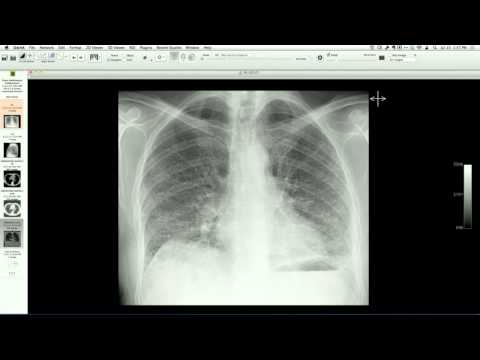
Chest CT in a renal transplant recipient demonstrates a dense, compact nodular consolidation in the right lung apex with a surrounding ground-glass halo, mimicking an angioinvasive fungal infection (such as aspergillosis) or nocardiosis.
Key takeaways
Legionella micdadei is an opportunistic pathogen in immunocompromised patients, particularly solid organ transplant recipients. It is famous for presenting as a rapidly progressive, nodular or "round" pneumonia that radiographically mimics fungal infection or nocardiosis but can be distinguished clinically by its much faster rate of growth.
AI-assisted summary — may contain errors. Verify against the source video. Learn more
More from this webinar
- Aortic Arch DissectionVascular
- Sclerosing PeriaortitisInflammatory
- Hypoplastic Left Heart Syndrome (Post-Norwood and Sano Shunt)Congenital
- Tetralogy of Fallot with Ductal Origin of the Left Pulmonary ArteryCongenital
- Migrating Pleural Mesothelial CystCongenital
- Chronic Diaphragmatic RuptureTrauma
- Bronchopulmonary DysplasiaCongenital
- Granulomatous-Lymphocytic Interstitial Lung DiseaseILD
See all cases from July 17, 2014 →
Related Infection cases
- Thoracic Spine Discitis-Osteomyelitis and Paraspinal Abscess due to Disseminated Mycobacterium avium complex
- Pneumocystis jirovecii Pneumonia in a Chemotherapy Patient
- Mixed Infection (MAC and Aspergillomas)
- Pulmonary Mucormycosis in a Diabetic
- Coccidioidomycosis Pneumonia
- Miliary Tuberculosis with Scrofula